Health and Safety Policy for Cleaners E14
 Health and safety for cleaners in E14 is a core part of delivering reliable, professional cleaning work. A well-structured policy helps reduce risk, support safe working habits, and protect both staff and property. This policy sets out the principles expected from cleaning operatives, supervisors, and anyone carrying out cleaning tasks in homes, offices, communal areas, and other managed spaces. It is designed to promote safe behaviour, consistent standards, and a responsible approach to everyday cleaning duties.
Every cleaner in E14 should understand that safety is not an extra step; it is part of the job. Cleaning often involves wet floors, chemical products, repetitive movements, lifting, and work in areas that may be busy or poorly ventilated. Because of this, each task must be carried out with care, attention, and the correct equipment. Preventing accidents begins with simple habits such as checking the area before work starts, using suitable signs, and choosing products that are appropriate for the surface and setting.
All cleaning personnel must follow clear safe-working practices at all times. This includes wearing the correct personal protective equipment, handling tools properly, and reporting hazards without delay. A good cleaning health and safety policy also requires workers to stay alert to changing conditions, such as spills, broken items, exposed wires, or restricted access. When risks are noticed early, they can be controlled before anyone is harmed.
Responsibility and Safe Working Standards
Health and safety responsibilities apply to everyone involved in the cleaning process. Supervisors should make sure that workers receive suitable instructions, relevant training, and clear information about the tasks they are expected to complete. Cleaners must take reasonable care for their own safety and the safety of others who may be nearby. This includes following site rules, using equipment correctly, and avoiding shortcuts that could create danger.
Cleaning teams should always assess the workspace before starting. A brief check can identify hazards such as slippery floors, blocked exits, unstable furniture, or poor lighting. If a task appears unsafe, it should be delayed until the risk has been reduced. Safe practice also means using warning signs where needed, keeping materials tidy, and ensuring that walkways remain free from obstructions.
 Chemical safety is another important part of the policy. All cleaning products should be stored securely, labelled clearly, and used according to the instructions supplied by the manufacturer. Mixing products must be avoided unless explicitly permitted, as some combinations can create harmful fumes or reactions. Workers should understand the difference between general-purpose cleaners, disinfectants, and specialist solutions, and should use only the amount needed for the task.
Equipment, Training, and Risk Control
Safe cleaning practice depends on equipment that is suitable, maintained, and used properly. Mops, vacuum cleaners, cloths, ladders, and other tools should be checked before use and taken out of service if damaged. Cables should be kept in a safe position, and electrical equipment should never be used with wet hands or in a way that creates a shock risk. Where lifting or carrying is required, workers should use correct posture and seek assistance for heavy or awkward items.
The middle of a strong cleaners’ safety policy is training. Staff should know how to work safely with chemicals, how to avoid slips and trips, and how to move efficiently without strain. Training should also cover emergency response, fire awareness, incident reporting, and basic first aid awareness. Good training improves confidence and helps cleaners make sensible decisions even when the environment changes quickly.
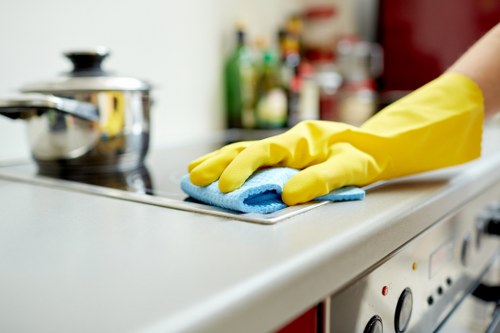 Risk control should always be proportionate to the task. For example, high-traffic areas may require extra caution, while enclosed areas may need improved ventilation before cleaning begins. If work involves height, reach, or movement between levels, the safer method should be chosen first. Protective gloves, suitable footwear, and other personal protective equipment must be used when required, and should be kept clean and in good condition.
Incident Reporting and Emergency Response
When an incident, near miss, or unsafe condition occurs, it should be reported promptly. Reporting helps prevent repeat problems and supports continuous improvement in the cleaning operation. Even minor issues, such as a small spill or a damaged tool, should not be ignored. A clear reporting system allows managers to review what happened, take corrective action, and update safe working methods where needed.
If an emergency arises, cleaners must know how to respond calmly and safely. This may include leaving the area, warning others, contacting the responsible supervisor, or isolating a hazard if it can be done without risk. No employee should attempt a task that exceeds their training or puts them in danger. A practical health and safety policy for cleaning staff also encourages the use of safe communication so that urgent issues can be escalated quickly.
Emergency preparedness should include awareness of evacuation routes, safe assembly procedures, and any special instructions relevant to the building or site. Cleaners should keep corridors, fire exits, and access points clear during work. Where cleaning is carried out in occupied premises, extra care should be taken to avoid alarming residents, staff, or visitors while still maintaining a secure and controlled environment.
Workplace Conduct and Wellbeing
Professional conduct supports health and safety by encouraging focus, respect, and consistency. Cleaners should avoid distractions while using chemicals or equipment, and should not work when tired, unwell, or under the influence of anything that could impair judgement. Regular breaks, hydration, and sensible pacing can reduce fatigue and help maintain safe performance throughout the day.
Wellbeing is also part of a responsible cleaning safety policy. Repetitive tasks, awkward reaches, and prolonged standing can place strain on the body over time. Employers and workers should therefore look for practical ways to reduce physical stress, such as varying tasks, using ergonomic tools, and planning work to minimise unnecessary movement. Small adjustments can make a significant difference to comfort and safety.
 A good policy also supports respectful treatment in the workplace. Cleaners should be able to raise safety concerns without fear of dismissal or criticism. Open communication helps build trust and allows issues to be resolved early. In this way, safety becomes part of everyday practice rather than a separate rulebook.
Review, Monitoring, and Continuous Improvement
Health and safety arrangements should be reviewed regularly to make sure they remain effective. Changes in working methods, equipment, staffing, or site conditions may create new risks that need attention. A periodic review helps confirm whether current controls are still suitable and whether additional training, supervision, or equipment is required.
 Monitoring standards is essential for maintaining a dependable service. Supervisors should observe work practices, check compliance with procedures, and encourage prompt correction where improvements are needed. Records of training, inspections, incidents, and corrective actions help show that the policy is being followed and give a clear basis for future updates.
By following this policy, cleaners can carry out their duties with greater confidence, fewer hazards, and a stronger sense of accountability. The aim is to provide a safe, organised, and professional working environment where risks are controlled and quality is protected. A clear cleaners health and safety policy benefits workers, clients, and everyone who uses the space.